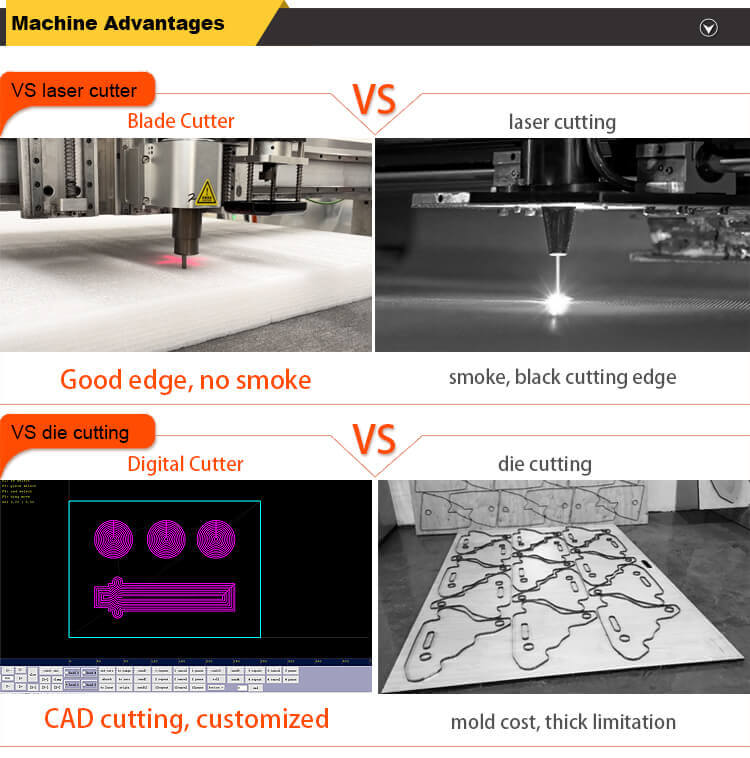
In the manufacturing sector, equipment is never just a purchase; it is a strategic investment. When considering the acquisition of a foam cutting machine, business owners must look beyond the price tag. The true value lies in how the machine impacts the bottom line over time.
From reducing raw material waste to slashing labor hours, a modern CNC foam cutter acts as a powerful lever for cost control. This article provides a comprehensive economic analysis, breaking down the Return on Investment (ROI), operational cost strategies, and the long-term financial benefits of upgrading your production line.
1. Investment ROI Analysis: Crunching the Numbers
To understand the value of a foam cutter, we must weigh the initial capital expenditure (CAPEX) against the operational savings (OPEX).
1.1 Initial Investment Costs
The upfront cost includes the machine purchase price, shipping, installation, and operator training. While this figure may seem significant, it is the denominator in the ROI calculation. A higher-quality machine often commands a higher initial price but depreciates slower and requires fewer repairs.
1.2 Efficiency Gains: Time is Money
Manual cutting is labor-intensive and slow. A CNC foam cutter can operate continuously with minimal supervision.
The Math: If a machine can do the work of 3 manual laborers in half the time, the reduction in payroll expenses contributes directly to ROI.
Throughput: Faster cycle times mean you can accept more orders without increasing your workforce, effectively increasing your revenue cap.
1.3 Cost Savings via Material Optimization
This is often the biggest hidden profit center. Manual cutting leaves large gaps between parts.
The Solution: Automated nesting software on digital cutters optimizes the layout, often saving 15-20% of raw material per sheet. Over a year, these material savings alone can often cover the monthly financing payments of the machine.

2. Cost Control Strategies: Maximizing Value
Owning the machine is step one; operating it economically is step two. Here is how to keep costs down.
2.1 Choosing the Right Equipment
Over-specifying a machine wastes capital; under-specifying kills productivity.
Strategy: Evaluate your material types (EPE, PU, Sponge) and daily volume. Do not buy a heavy-duty router if you only cut soft sponge. Select a foam cutting machine that matches your specific production needs to ensure the best price-to-performance ratio.
2.2 Regular Maintenance as Cost Avoidance
Breakdowns are expensive—not just in repairs, but in lost production time.
2.3 Optimizing Production Workflows
Integrate the machine into a lean workflow. Use the machine's data capabilities to identify bottlenecks. For instance, if the machine is idle waiting for material, consider adding an automatic feeding system to keep the cutter running non-stop.

3. Long-Term Financial Benefits
The benefits of a high-precision cutter compound over time.
3.1 Improved Product Quality = Customer Retention
High-precision cutting (±0.1mm) reduces the rate of defective products. Fewer rejections mean less wasted material and labor reworking parts. More importantly, consistent quality builds trust, allowing you to command premium pricing and retain loyal customers.
3.2 Expanding Market Share
With increased speed and capabilities (such as complex 3D cutting), your business can bid on contracts that were previously impossible to fulfill. This ability to scale production rapidly allows you to capture a larger market share during peak seasons.
3.3 Sustainability and Efficiency
Modern machines are designed to be energy-efficient. Furthermore, by maximizing material yield, you reduce the cost of disposing of scrap foam. In an era where sustainability is a selling point, this "green" efficiency can also be a marketing asset.
Conclusion
The economic case for a modern foam cutting machine is clear. While the initial investment requires capital, the combination of material savings, labor reduction, and increased throughput delivers a compelling ROI.
By viewing the machine not as a cost, but as a tool for cost control and revenue growth, manufacturers can make confident decisions that secure their financial future.
Ready to calculate your potential savings?Contact our team for a consultation. We can help you estimate the ROI based on your specific production volume and material costs.
Frequently Asked Questions (FAQ)
Q: How long does it typically take to see a Return on Investment (ROI) for a foam cutting machine?
A: While it varies by production volume, many manufacturers see a full ROI within 12 to 18 months, primarily driven by savings in raw materials (via nesting) and reduced labor costs.
Q: Does the machine require expensive software to save materials?
A: Most of our machines come equipped with or support standard nesting software. The cost of this software is negligible compared to the annual savings in raw foam materials.
Q: How does a foam cutter reduce labor costs?
A: A CNC cutter automates the cutting process. One operator can often manage the machine while performing other tasks (like packing), whereas manual cutting requires constant, dedicated attention from multiple workers to achieve the same output.