In the fast-paced world of modern manufacturing, precision and speed are not just goals—they are requirements. Whether you are in the packaging, furniture, or automotive industry, the quality of your foam components can define the success of your final product. As market demands shift towards higher customization and tighter tolerances, selecting the right foam cutting machine has become a critical strategic decision.
This guide explores the various types of foam cutting technologies available, the key factors you must consider before purchasing, and how the right equipment can transform your production line from a bottleneck into a competitive advantage.
1. Types of Foam Cutting Machines: Finding Your Perfect Match
Not all foam is created equal, and neither are the machines designed to cut them. Understanding the specific capabilities of each technology is the first step toward optimization.
1.1 Automatic PU Foam Cutting Machines
Best for: Furniture manufacturing, upholstery, and automotive seating.
These machines are the workhorses of the soft foam industry. Equipped with intelligent nesting software, they maximize material yield from large foam blocks.
1.2 Sponge & Flatbed Digital Cutting Machines (Oscillating Knife)
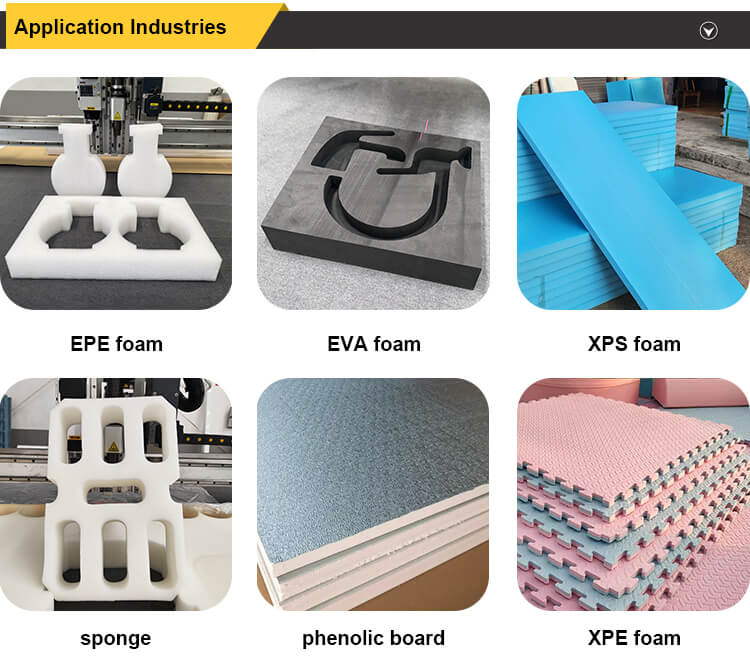
Best for: Acoustic panels, PU sponge, and EPE foam.
Unlike traditional die-cutting, digital oscillating knife cutters use a high-frequency vibrating blade. This ensures that soft materials are not compressed during the cutting process, resulting in perfectly vertical edges.
1.3 CNC XPS Foam Cutting Machines
Best for: Construction insulation, architectural modeling, and 3D props.
Utilizing hot wire or router technologies, these machines glide through rigid extruded polystyrene (XPS) to create complex 3D shapes without creating dust or debris.
1.4 Die-less EPDM Foam Cutting Machines
Best for: Industrial gaskets, seals, and rubber foam.
For industries requiring high-volume gasket production without the high cost of dies, these digital cutters offer a flexible solution. They feature automatic feeding systems for continuous operation.
1.5 Foam Cutters with Milling Tools (Router Combo)
Best for: Custom packaging inserts and rapid prototyping.
These hybrid machines combine standard cutting heads with high-speed routing spindles. They can cut the outline of a foam insert and mill out pockets of varying depths in a single pass.

2. Key Considerations When Choosing a Foam Cutter
Investing in a CNC foam cutter is significant. To ensure a high Return on Investment (ROI), evaluate these five critical factors.
2.1 Cutting Precision and Edge Quality
Precision affects the fit and finish of your final product. For industries like aerospace or premium packaging, a deviation of even 1mm is unacceptable. Look for machines with servo-motor drives that guarantee high repeatability.
2.2 Level of Automation
Automation is the direct path to efficiency. Does the machine offer automatic loading and unloading? Does the software support auto-nesting to arrange parts efficiently? High automation reduces labor costs and human error.
2.3 Material Compatibility
Ensure the machine matches your material density. A hot wire cutter is excellent for EPS but fails on PU sponge. Conversely, an oscillating knife is perfect for soft foams but may struggle with extremely rigid plastics.
2.4 Production Efficiency (Speed & Duty Cycle)
Evaluate the cutting speed (mm/s) and the machine’s ability to run 24/7. For high-volume orders, a machine with a conveyor belt system allows for continuous cutting, significantly boosting daily throughput.
2.5 After-Sales Service and Warranty
A machine is only as good as the support behind it. Prioritize suppliers who offer comprehensive training, readily available spare parts, and a robust warranty policy to minimize downtime.
3. The Competitive Advantages of Modern Foam Cutters
Why upgrade from manual cutting or older hydraulic presses to a modern CNC solution?
Skyrocket Production Efficiency: Automated workflows reduce cycle times. What used to take hours by hand can now be done in minutes.
Minimize Material Waste: Advanced nesting algorithms calculate the most efficient layout, significantly reducing scrap rates and saving raw material costs.
Enable Customization: Digital cutting eliminates the need for physical dies. You can switch from cutting 10,000 standard units to 1 custom prototype instantly, allowing you to offer bespoke solutions to your clients.
4. Case Studies: Real-World Success
Case Study A: The Packaging Innovator
A leading electronics packaging firm struggled with high mold costs for small-batch orders. By switching to our Oscillating Knife Foam Cutter, they eliminated die costs entirely.
Case Study B: The Automotive Supplier
A car seat manufacturer needed to reduce fabric and foam waste. Implementing our Automatic PU Foam Cutter with intelligent nesting software allowed them to optimize material usage.
Conclusion
Selecting the best foam cutting machine is about aligning technology with your specific production goals. Whether you need the delicate touch of a digital knife for acoustics or the robust speed of a CNC router for packaging, the right equipment will lower costs and elevate quality.
Ready to transform your production line?Explore our full range of CNC Foam Cutting Machines or contact our engineering team today for a personalized consultation and quote. Let us help you stay ahead of the competition.

Frequently Asked Questions (FAQ)
Q: What is the difference between a hot wire cutter and an oscillating knife cutter?
A: A hot wire cutter uses heat to melt through rigid foams like EPS and XPS, making it ideal for block shaping. An oscillating knife uses a vibrating blade to slice through soft foams like PU, EPE, and sponge without melting or burning the edges.
Q: Can your foam cutting machines handle high-density rubber foam?
A: Yes, our digital cutting machines equipped with pneumatic oscillating tools (POT) are specifically designed to cut dense materials like EPDM and rubber foam effectively.
Q: Do I need CAD skills to operate these machines?
A: Basic CAD knowledge is helpful, but our machines come with user-friendly software that can import standard files (DXF, PLT) and automatically generate cutting paths, making it easy for operators to learn.